


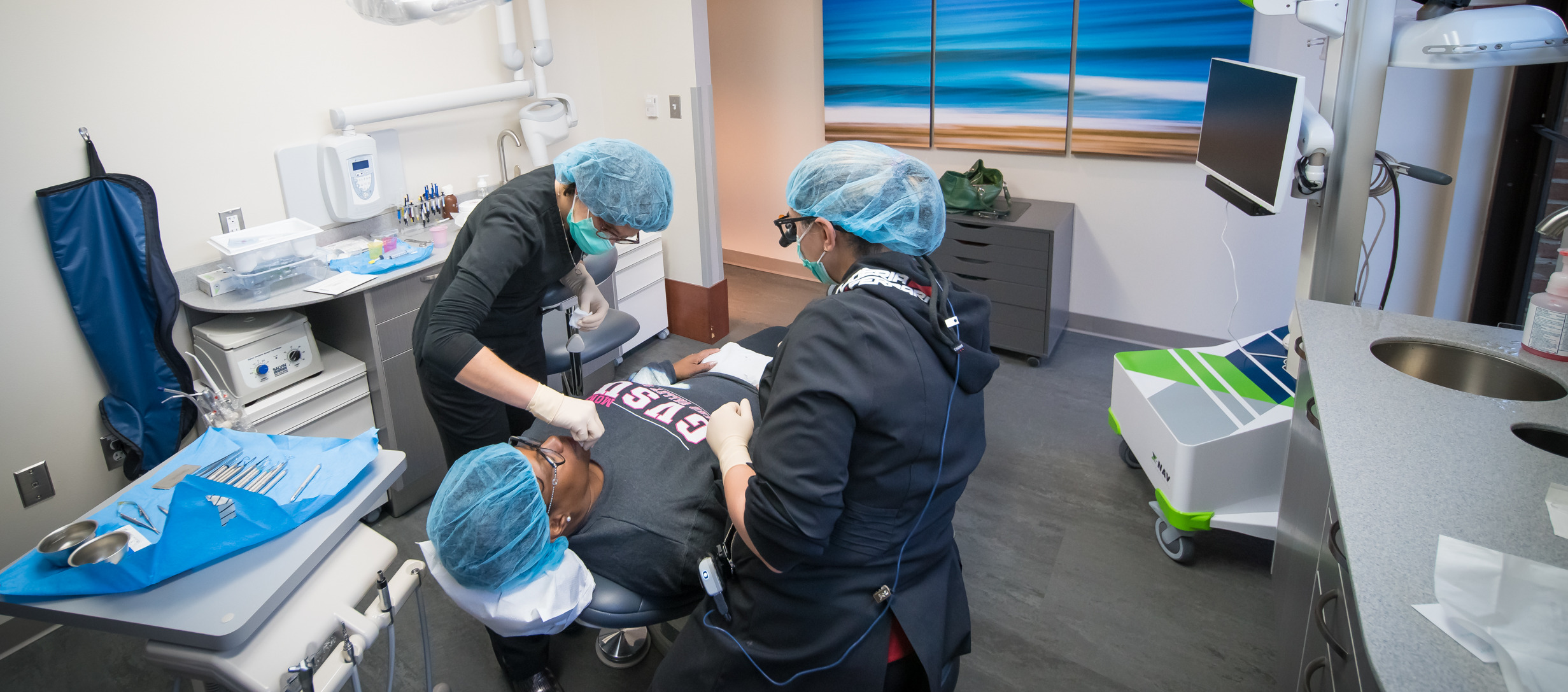
Rebuilding Lost Jawbone with Intention
When a tooth is lost, the surrounding jawbone no longer receives stimulation and gradually resorbs. Over time, this bone loss can compromise bite stability, facial support, and the ability to place dental implants.
Dental bone grafting rebuilds this lost foundation, allowing for:
- Predictable placement of dental implants
- Improved bite alignment and chewing stability
- Preservation of facial structure and profile
- Prevention of further bone deterioration
Our approach focuses on rebuilding only what is necessary—nothing excessive, nothing arbitrary.
What Is Dental Bone Grafting?
Dental bone grafting involves placing bone graft material into areas where jawbone has been lost. Over time, the graft integrates with your existing bone, establishing blood supply and creating new, stable bone capable of supporting teeth or implants.
At DGY Dentistry, grafting is customized based on the location and severity of bone loss, your anatomy, and your long-term restorative goals.
Bone grafting may be recommended when:
- Bone loss prevents secure implant placement
- Teeth have been missing for an extended period
- Periodontal disease has reduced bone support
- Preserving facial structure after extraction is a priority
Bone Graft Material Options
Selecting the appropriate graft material is an important part of treatment planning. At DGY Dentistry, we evaluate each case individually and may recommend one of the following:
Autograft (Your Own Bone)
An autograft uses bone harvested from another area of your jaw. Because it comes from your own body, it integrates very predictably and is often considered the gold standard for bone regeneration. Autografting may be recommended when significant bone rebuilding is required.
Allograft (Donor Bone)
Allografts use processed donor bone that serves as a scaffold for your own bone to regenerate. This option avoids a second surgical site and is commonly used for moderate bone defects.
Synthetic or Biocompatible Graft Materials
In certain cases, synthetic materials may be used to support bone regeneration. These materials are carefully selected based on location, size of the defect, and implant planning.
We discuss all options in detail and recommend the grafting approach that best supports stability, healing, and long-term outcomes.
The Dental Bone Grafting Process at DGY Dentistry
Bone grafting is performed with careful technique and typically completed in a single surgical visit.
Site Preparation & Graft Placement
The graft site is accessed and prepared. The selected graft material—autograft, allograft, or synthetic—is placed and stabilized to encourage integration with your existing bone.
Healing & Integration
Over the following months, the graft establishes blood supply and gradually transforms into strong, functional bone. During this period, activity and chewing restrictions help protect the site while healing progresses.
Implant Placement (When Indicated)
Once integration is complete, dental implants may be placed. In select cases, grafting and implant placement can be performed simultaneously when adequate initial stability is present.
Why Choose DGY Dentistry for Bone Grafting in Ann Arbor?
Bone grafting requires accuracy, restraint, and long-term vision. At DGY Dentistry, we use advanced 3D imaging to evaluate bone volume and guide precise graft placement.
Our approach emphasizes:
- Individualized graft selection, including autografting when appropriate
- Conservative surgical technique
- Integration with future implant or restorative plans
- Clear communication and detailed aftercare
Every graft is placed with the intention of supporting predictable, durable restoration.
Frequently Asked Questions About Dental Bone Grafting
Autografts use your own bone, which integrates very reliably and supports robust bone regeneration. This option may be recommended for larger or more complex defects.
Initial healing occurs within a few weeks, while full integration typically takes several months. Healing timelines vary depending on graft size and material and are reviewed during planning.
If implants are planned in the upper back jaw and bone height is insufficient, a sinus lift may be recommended in addition to grafting. This is determined through imaging and evaluation.
Many insurance plans provide partial coverage when grafting is medically necessary. We review benefits and provide clear estimates before treatment.
A Foundation for Lasting Restoration
If you have bone loss and are preparing for dental implants—or wish to preserve jawbone structure—we invite you to schedule a consultation at DGY Dentistry. Dental bone grafting, including autografting when appropriate, provides the structural foundation needed for stable, long-term restoration.
